|   home
                                                  
Historical Overview
Back To After Action Reports


 Historical Overview 1965 through 1970
excerpts from the 25th Infantry Red Book 1965-1970, and Patrick McKeand


"Tropic Lightning" History-Vietnam
In the Beginning 1965
Map of Area of Operation

   In a Moment, the sounds of hell will shatter the solitude of A Peaceful day. Bullets will rip through soft breezes while tense bodies advance in search of danger. The crude contrivance of an ingenious enemy will split the formation, disrupt the activity, whet the appetite.
    An Inspired soldier will answer the call to arms and boundless energies of a razor-sharp force will be unleashed against the ruthless opponent.

The rapid response from the alert rifleman…
The sudden burst of artillery…
The devastating air strike…
Then Silence...

    The sun will seep along its westward path and the darkness of night will prevail upon vigilant eyes…
Eyes which know the ugly face of death, know the end results of an aggressive tyrant, know the rewards of a world where choice and freedom dictate the way of life.
    The triumphs of each day will build the faith of an imperiled society, strengthen the cause for freedom, instill the hope of ultimate peace..

    This is the story of the 25th Infantry Division, written by the man who wears the “Tropic Lightning” patch, skilled through the rigors of intensive field training, matured by the strains of combat…in three wars.
It’s a story of dedication, determination…and courage.
    They call it “Hell’s Half Acre” because of the fierce fighting which has taken place where the 25th Infantry Division now has its base camp.
    Before the “Tropic Lightning” arrived, it was a sanctuary. The Viet Cong came to the Cu Chi area to rest and relax after a hot battle in the field. It was a good base of operations for “Charlie,” only 20 miles northwest of Saigon. Other soldiers had passed through the area but none had attempted to stay. And when the 25th Division tried to do what no other division had yet done, they found that it was not an easy assignment. Stories of the valiant soldiers in Vietnam are repeated over and over again.
    There is the story of Danny Fernandez, a rare young man admired by his contemporaries - quite cheerful, competent, unselfish. While on a search and destroy mission with C company, 1st Battalion (Mech), 5th Infantry, Fernandez and his buddies were in a battle position when a grenade came flying in. Fernandez immediately jumped on it and covered it with his own body, shielding the others from the blast.
    Acts and deeds of heroism are recorded wherever “Tropic Lightning” operates in Vietnam.
The latest chapter in the story of the 25th Infantry Division begins in a land where tanks meet ox carts at every crossroads, a country where war has become a way of life, a nation on the threshold of progress and prosperity. “Tropic Lightning” soldiers in Vietnam contributed to the cause for freedom, the hope of peace, the triumph over communism and victory in the Cold War.
    The Honolulu Advertiser (September 10, 1964 issue) carried a story that read in part…”Combat troops for the 25th Infantry Division at Schofield Barracks, Hawaii,” are being sent to Vietnam to serve as machine gunners aboard U.S. helicopters, Army spokesman disclosed here yesterday.
    “This is the first acknowledgment by a U.S. agency that some American troops are being committed to the Vietnam War in capacities other than advisors.”
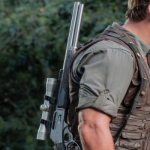
    Today, the story, as is the name, Is antiquated. The nickname “shotgun riders” is taken from the Wild West days when shotgun-carrying guards accompanied stagecoaches on cross-country runs.
    The quick draw of those shot gunners was replaced by the :"Tropic Lightning” draw of the 25th Infantry Division soldier who rode “Shotgun” in Vietnam from January 1963 to January 1966.

To kill a tiger, learn the ways of the tiger.

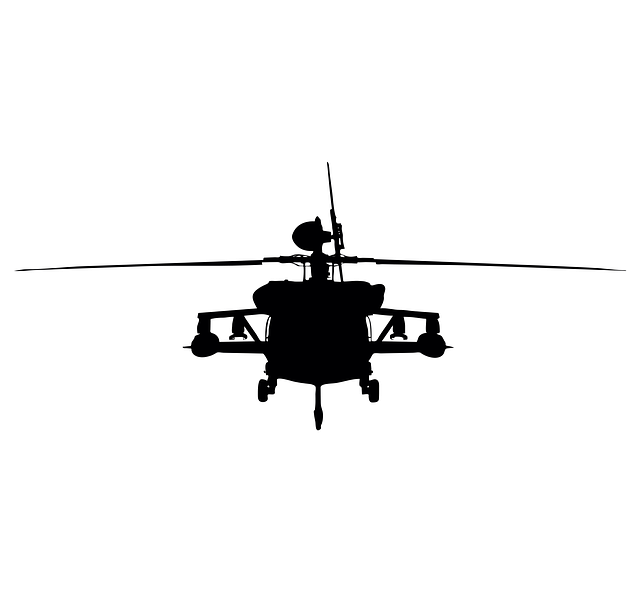
    That was the theme of the program for training “shot gunners” - or officially, Aerial Door Gunners - those tough, skilled soldiers who, in the tradition of their counterparts on the stagecoaches of the old West, protected their UH-1 “Sky-coaches” while flying over South Vietnam.
    It was fall of 1962 when the U. S. Military Assistance Command, Vietnam, asked the Department of the Army for help in protecting the troop-carrying helicopters being used to fight the Viet Cong. By January 1963, the 25th Infantry Division had responded to the call and had sent the first group of 100 volunteer Aerial Door gunners to Southeast Asia.
    Three years and 2,200 men later, the “Tropic Lightning” Divisions highly regarded “Shotgun” program came to a close. Its members had compiled an enviable record of combat in a modern application of the stagecoach shot gunners of Wild West days.
    In a speech before the Senate, and recorded in the Congressional Record, Senator Daniel K. Inoye of Hawaii said, “Within the 25th Infantry Division there is the elite corps of officers and men carrying on the finest traditions of the American fighting man. They are called shotgunner by their friends, and a far worse name by the Viet Cong they volunteer to fight. They know who the enemy of world freedom is; they believe in what they are doing, and as a 25th Infantry Division motto states, they are “Ready to Strike, Anywhere! Anytime!”
    It was a quiet and peaceful Sunday morning at Schofield Barracks. The usual pastoral scene. There was no suggestion, no possible intimation to outsiders of Quad I how 22 August 1965, was being honored by “Charlie” Company 65th Engineer Battalion.(See Photos Above)
    It happened fast, yet free from noise and disturbance. More than 170 fully-equipped men were assembled, roll was called, then all hustled into waiting buses.
    Forty-five minutes later: Pier 40. The proud company banner was carried aboard the Military Sea Transportation service transport, General Edwin D. Patrick. Destination - Southeast Asia.
    A few hours later, the Patrick sailed out of sight. The engineers who landed 7 September 1965 at Cam Ranh Bay, a former French resort area, found little to be reminiscent of home, other than the attitude of the friendly, but reserved Vietnamese people.
    The more than 170 men dug in on a plain-like area similar to the way Hawaii's Plains of Waianae, home of Schofield Barracks, must have looked around the turn of the century: hot and devoid of water.
But American ingenuity and the powerful U.S. supply line into this beleaguered country served the men well in turning a desolate field into a base of operations for construction, reconnaissance and rehabilitation work.
    Tanned from the beaches of Hawaii, where the division had been stationed since 1954, and lean from the months and years of tough jungle training, the men looked the part of the gallant combat veterans they were to become in the early moments ahead.
    At the Pleiku Airstrip there was no time for small talk; no time for stretching legs after the long Pacific flight. As Colonel Stoutner loaded his men on convoys for the trip to their new home, a barren patch of land nestled in the Vietnam countryside, a crew of men unloaded the mass of equipment the men brought with them.
    The 3rd Brigade, however, was also greeted with the sounds of war, as Air Force A1E “Skyraiders” dropped their 250 pound bombs, released napalm and fired rockets at a Viet Cong platoon skirting the brigades perimeter, while the long truck convoys pulled into their new “home.”
    Command and pup tents went up immediately. Barbed wire barricades surrounded the encampment. In a few short minutes, mortars were pointing at the lurking enemy.
    The Pleiku and Cu Chi based “Lightning-aires” stripped down to their green T-shirts and began digging the soldiers second friend - his foxhole. His best friend, the rifle, was always within reach.
    In both brigade areas, the problem of dust brought back to the “Tropic Lightning” soldier memories of his training days in the lava beds of Hawaii. Those training days are gone and again the 25th Infantry Division has been called upon to add its “Tropic Lightning” attack to the battle.
    Before the dust settled in the two brigade camp areas, the famed Hawaiian-based division welcomed a contingent of troops from Division Artillery, Support Command, and Division Headquarters in March.
    The final move from Hawaii for the 25th Division was in April 1966 when the1st Brigade arrived at Vung Tau and moved to Cu Chi to take its place along side other elements of the division in combat.
    WAR! Three magnanimous alphabetical characters that achieved a stark realism for the men of the “Tropic Lightning” Division in an untamed and sniper infested island in the middle of a sea of Viet Cong guerillas.
    Before elements of the 2nd brigade could settle back and claim their new piece of real estate at Cu Chi, Vietnam, the entire area had to be cleaned out, and the Viet Cong dragged out of the intricate tunnel complexes which honeycombed the base camp area.
    Northeast of the base camp stand the infamous HoBo Woods, a patch of heavy forestation that even crack U.S. airborne troops haven't been able to deny to the Viet Cong.
    To the north lies War Zone C, reported to be the Viet Cong command center for the whole country, and to the west of the base camp the Vam Co Dong River flows blandly, carrying infiltrated men, supplies, and equipment between the Viet Cong bases.
    The unsung war chant of the 25th Infantry Division immediately struck a “We Belong here” note.
In a series of moves designed to root the unwanted guests from the 25th Divisions newly adopted homeland, Operations “Bobcat,” “Taro Leaf I and II,” “Clean Sweep I and II,” “Paddy Bridge,” “Search Out.” “Flush Out,” and “Kolchak I” slashed through extensive Viet Cong emplacements during the months of January and February 1966.
    The once besieged wooded and seemingly impenetrable jungle camp area was leveled and made comparable to a golf course. Elements of the 2nd brigade cut a swath through the area in an effort to destroy extensive Viet Cong tunnels and fortifications and expand the perimeter. Insurgents were destroyed, enemy ammunition and supply caches were confiscated, mines and booby traps were uncovered and neutralized.
    After two months of pounding the enemy “round-the-clock”, the 25th Divisions enclave at Cu Chi was firmly established.
    Also, during January and February 1966, 250 miles to the north of Cu Chi, the 3rd Brigade Task Force at Pleiku was making history by opening the Viet Cong controlled highway 19 during Operations “Kamehameha” and “Taylor.” Once opened, the tons of supplies vital to wage successful battles began pouring into the 3rd Brigade base camp.
    While the swinging picks were still hacking into the dusty ground at Cu Chi, putting the finishing touches on tent kits, mess halls and working areas.  Operations “Del Ray,” “Circle Pines,” “Akron,” and “Asheville” continued to eliminate moderate to heavy Viet Cong resistance. Meanwhile, the stage was set at Pleiku for the 3rd Brigade Task Force undergoing Operations “Garfield,” “Lincoln,” “Longfellow” and “Paul Revere.”
    Operations “Fort Smith,” “Fresno” and “Sante Fe,” area pacification missions conducted by “Tropic Lightning,” were combined with conventional military operations during June.
    “Fort Smith” provided the villagers in the Ap An Binh area the opportunity to learn of their government’s fight against communism through the thousands of leaflets dropped by American aircraft and by word of mouth from ARVN civic action workers and their fellow countrymen.
    Operation “Fresno” resulted in “Tropic Lightning” soldiers capturing nine Viet Cong through the defection of a Viet cong platoon leader. The platoon leader resettled with his family in one of the government’s “new life” hamlets and began supporting, instead of defying, the government.
    “Sante Fe” consisted of civic action programs, road construction, “Helping Hand” operations, and the construction of an Army of the Republic of Vietnam compound.
    In what was described as one of the largest single hauls of prisoners, enemy arms, and ammunition in the III Corps area by any U.S. unit, as the 1st Battalion (Mech), 5th Infantry, conducted a hard-fisted search and clear operation tabbed “Makiki.”
    The 2nd Brigade mission in Hau Nghai Province netted an ammunition supply depot containing Russian carbines, Chinese carbines, German Mausers, Chinese submachine guns, and Chinese anti-tank rockets.
    During mid-June  the 3rd Brigade Task Force continued to sweep the area west-southwest of Pleiku on Operation “Paul Revere.”
    Since the operation’s inception, elements of the brigade accounted for 279 North Vietnamese and Viet Cong killed.
    Most of the action occurred during an encounter earlier in the month which saw men of the task force in heavy engagement with what was later estimated as a North Vietnamese regiment. The communists broke contact and withdrew to the west.
    Notable operations for the Cu Chi based 25th Infantry Division during the same time included “Joliet,” “Fargo,” “Helemano,” “Nogalis,” and “Ehu.”
    June 1966 closed with the 1st Battalion (Mech), 5th Infantry, severing a path through the HoBO Woods on Operation “Coco Palms.” In addition to large stores of small arms ammunition, hand grenades, antitank mines, claymore mines, and rifle grenades were taken.
    The operation yielded 10 Viet Cong killed and two confirmed Viet Cong captured. The ensuing month saw the 1st Battalion, 27th Infantry, on Operation “Ewa,” 23 miles southwest of the “Tropic Lightning” Division’s Cu Chi base camp. The “Wolfhounds” conducted the search and destroy operation for five days, killing 14 Viet Cong and capturing six.
    Other operations moved men of the 25th on “Kahana I and II,” “Mokulea,” “Koko Head,” and “Oahu.”
By the end of July, the “Tropic Lightning” at Cu Chi had accounted for more than 1,000 dead Viet Cong since their arrival in Vietnam.

 Operation Attleboro
Map of War Zone C (Soui Da)

    Operation Attleboro (14 September - 25 November 1966) was a large Search and Destroy operation that was initiated by the 196th Light Infantry Brigade, but eventually was expanded to include not only the 196th, but also elements of the 1st Infantry and the 25th Infantry Divisions who joined forces to conduct combat sweeps and assaults over a wide area of  War Zone C. A description of the 25th Divisions operation follows:
    On 7 November, following heavy contact by elements of the 1st Division northeast of Soui Da, the decision was made to pursue the Viet Cong 9th Division. The 25th Infantry Division was given a segment of the operation. In response to a II Field Force directive, the division ordered the 2nd Brigade to move its headquarters and the 2nd Battalion, 14th Infantry to Tay Ninh. This was accomplished on 8 November. On 9 November, the Division Forward Command Post along with the Artillery Command Post displaced to Tay Ninh. The Division Forward CP assumed control of the operation at 0930, 10 November. The division mission was to destroy elements of the 9th Viet Cong Division in War Zone C. At this time it was believed the Viet Cong 271st Regiment was located in the woods northeast of Bau Co. An order was passed to the 2nd Brigade to conduct search and destroy operations in the area to destroy the 271st Regiment.
    Brigade Headquarters, 1st Battalion (Mech), 5th Infantry and the 2nd Battalion, 14th Infantry moved to establish a fire support base at Bau Co. The 1st Battalion, 8th Artillery then displaced to Bau Co. The 1st Battalion, 27th Infantry was still attached to the 1st Division and the 2nd Battalion, 27th Infantry secured the Tay Ninh Base Camp. A decision was made  to open the road from Soui Da to Bau Co to save helicopters. General Weyland was concerned with the threat to the 25th Infantry Division rear from the Boi Loi-Hobo complex. He therefore detached the 2nd Battalion (Mech), 22nd Infantry from the 3rd Brigade, 4th Infantry Division (now 3rd Brigade, 25th Infantry Division) and moved it to Cu Chi. The battalion was attached to the 25th Infantry Division at 0800, 11 November 1966, and arrived at Bau Co along with two batteries of artillery.
    A series of operations was conducted from this base. The 2nd Battalion, 14th Infantry, conducted operations from 11-13 November east of Bau Co. The 1st Battalion, 27th Infantry, conducted a combat assault on the 12th and established a base to search out an area hit by a B-52 strike. It was expected back on the 13th. The 1st Battalion (Mech). 5th Infantry, conducted a search and destroy operation north of Bau Co and established on 12 November a base which was later called Fire Support Base 1. On 13 November the 1st Battalion (Mech), 5th Infantry, exploited a B-52 strike. The 2nd Battalion, 27th Infantry, moved to the Bau Co base on 12 November. On 12 November, all elements of the 196th Light Infantry Brigade had been released from control of the 1st Infantry Division. The 4th Battalion, 31st Infantry, moved east of Nui Ba Den on 12 November to remain until 18 November, with the mission of securing the road. On the 12th, it established three company sized bases north of Go Dau Ha and Bao Don with the mission of conducting operations south of the Boi Loi Woods. At early light it was given orders to secure the Route 22 bypass In the vicinity of the Cau Khoi Plantation after the decision was made to open the road from Dau Tieng to Tay Ninh. The 2nd Battalion (Mech), 22nd Infantry, made this move on the 13th. On 13 November, the division mission changed before it could  completely search out its area of responsibility.
    From search and destroy operation, the division’s mission was changed to reconnaissance by force. The 2nd Brigade was then directed to conduct operations astride Route 4 to Kontum and be prepared to move north and seize objectives near The Cambodian border or to move southeast to seize Bo Duc. This resulted in the 2nd Battalion (Mech), 22nd Infantry being attached to the 2nd Brigade on 14 November, and the 2nd Battalion, 1st Infantry, under the 196th Brigade, took over the mission of guarding the route 22 Bypass, and the plantation. Fire Support Base 2 was established by the 1st Battalion (Mech), 5th Infantry, and the 2nd Battalion (Mech), 22nd Infantry, on 15 November. Two batteries of artillery were moved into this area. The 1st Battalion, 27th Infantry, secured Fire Support Base 1 and was later joined by the 2nd Battalion, 27th Infantry on 16 November. Two batteries of artillery were also located in this  base. Local operations were conducted in the vicinity of these bases for several days. The base at Bau Co was closed on the 17th and the 2nd Battalion, 14th Infantry, moved back to Tay Ninh. On 18 November  the 1st Battalion (Mech), 5th Infantry, drove north and arrived near the border on the 19th. Company A had a firefight en route resulting in 11 Viet Cong killed by actual body count. The 2nd Brigade was then given an order to conduct a recon north and northwest of Katum and be prepared to recon east of Katum, conducting operations in this area through the 22nd. The 1st Battalion, 27th Infantry, then moved from FireSupport  Base 1 to Fire Support Base 2 on the 18th. A series of combat assaults were conducted from the 20-23rd. The 2nd Battalion, 14th Infantry, conducted one on the 20th in the area where the 2nd Battalion (Mech), 22nd Infantry, had the sharp fire fight on the 19th. . They conducted another on the 21st to establish a temporary Fire Support Base to support  the aero-rifle platoon which was to exploit a B-52 air strike next to the border on that date. The 1st Battalion, 27th Infantry had a combat assault on the 21st and another on the 23rd. The decision was made  not to move the  1st Battalion (Mech), 5th Infantry southeast of the Bo Duc area. Instead the 2nd battalion, 27th Infantry, conducted an air assault into this area on the 22nd. On the 23rd, the 1st Battalion (Mech), 5th Infantry, moved back to Fire Support Base 1 and then secured Fire Support Base 2 with one company on the 24th. The majority of units moved back to the base camp on the 24th and the operation ended on the 25th for all units except the 1st Battalion (Mech), 5th Infantry, which conducted deep reconnaissance east of Trai Bi.
    After the operation, division officials felt that the main Viet Cong Force in its area was the 70th Regiment which is a Recon and Security unit of COSVN (Central Office for South Vietnam). The forces in both the 1st and 25th Infantry Divisions areas of operations were the 70th Viet Cong Regiment and the 101st NVA Regiment....To learn More click link to story (Operation Attleboro-Stag magazine Article),1st / 5th Mech Operation Attleboro After Action Report,Mike Force During Attleboro After Action Report, 145th Aviation , After Action Report,
2nd Brigade, After Action Report

 Operation Cedar Falls
(Map of Iron Triamgle Area)

    Operation Cedar Falls (8 January-26 January 1967) was a blocking, and search and destroy operation along the Saigon River to prevent ex-filtration from the Thanh Dien Forestry Reserve and the Iron Triangle, denying the use of the Saigon River in the sector to Viet Cong/NVA forces.
    On  6 January, the division , under the guise of normal operations, deployed the 196th Light Infantry Brigade, which at the time was attached to the25th Infantry Division. The 2nd Battalion (Mech), 22nd Infantry moved from Dau Tieng along the southern edge of the Boi Loi woods to an overnight position. At the same time the 1st Battalion (Mech), 5th Infantry with Troop B, 3rd Squadron, 4th Cavalry attached moved into the area north of the Trung Lap Ranger Training Center, to initially open a route and secure artillery support bases. The 3rd Battalion, 21st Infantry and supporting artillery, consisting of the 3rd Battalion, 82nd Artillery, and A Battery, 2nd Battalion, 77th Artillery, was lifted into these bases. The 196th Light Infantry Brigade Command Post and elements of the 3rd Battalion, 13th Artillery and 2nd Battalion, 32nd Artillery moved by convoy to Trung Lap. On 7 January, the 1st Battalion, (Mech), 5th Infantry secured a Landing Zone for the 2nd Battalion, 1st Infantry. All elements less the fire support base security forces moved to blocking positions along the Saigon River at the same time the 2nd Brigade moved to blocking positions along the Saigon river north of the Filhol Plantation and Nha Viec. They deployed with Task Force 2nd Battalion , 34th Armor in the north, Task Force 2nd Battalion, 27th Infantry in the south. During the nights a maximum amount of ambushes were placed along the river. During daylight minimum forces secured the river, allowing extensive search and destroy operations in the Viet Cong base areas. Control of traffic on the river was the responsibility of the 25th Infantry Division, while the 1st Infantry Division was responsible for the control at the junction of the Saigon-Thi Tinh Rivers. The 1st Infantry Division with the 173rd Airborne Brigade and the 11th Cavalry Regiment blocked enemy escape routes across the Thi Than River, executed an air-mobile assault north of the Iron Triangle, and then executed search and destroy operations south through the area.
    Totals for the 18-day operations were 331 Viet Cong killed by actual body count, 39 Prisoners of War captured, 147 Hoi Chanhs rallied, and 147 detainees held for questioning, seven M-1 rifles, 10 Mausers, six AK-47 assault rifles, 18 pistols, two shotguns, one pellet gun, three rocket launchers, two BARs, three rounds of rocket ammunition were captured, along with numerous miscellaneous explosives, bangalor torpedoes and grenades. The confiscated 21,385 tons of rice. Air support sorties numbered 409 and five B-52 bomb strikes were made during the operation.
To learn More click link to story (After Action Report) ,After Action Report (196th LIght Infantry) ,2nd Brigade Cedar Falls ,Lessons Learned -Cedar Falls ,


 Operation Gadsden
(Map of Tay Ninh Area)
(Map of Katum Area)

    Operation Gadsden (2-21 February 1967) was a multi-brigade search and destroy-blocking operation conducted in Tay Ninh Province along the Cambodian border. The operation was designed to expose and deny Viet Cong infiltration and ex-filtration along well established routes across the border in War one C.
    The operation was kicked off on 2 February by elements of the 25th Infantry Division and II field force. On 3 February the 2/22nd Infantry engaged an estimated Viet Cong platoon. The Viet Cong fought from concealed positions and maintained contact for several hours. Also, on 3 February, the Reconnaissance 1/5th Platoon received small arms, automatic weapons and recoilless rifle fire from 15-20 Viet Cong. The Viet Cong wore mixed camouflaged uniforms and black pajamas, and fought with considerable determination, exhibiting good discipline and fire control. On the evening of 4 February, the 2/1 Infantry received 50 rounds of 82mm mortar fire in their battalion base area, sustaining light casualties. Earlier in the day Company A, 2/1 Infantry captured a training model of a rocket launcher. This was  the first of several indications that the area of Operation Gadsden was a primary training ground for Viet Cong main force units. On February, A/4 31st Infantry received small arms (SA), automatic weapons (AW) and rifle grenade fire from 8-10 Viet Cong. After a moderate exchange of fire, the Viet Cong withdrew. On 5 February A/1/5 Infantry received heavy SA, AW and rifle grenade fire from an unknown number of Viet Cong. Fifteen Viet Cong were KIA as a result of  this action. Captured on the field was one Chicom heavy machinegun, type 57, which indicated a company size unit or larger, but no unit identification could be made from the equipment or documents captured in the area. On 5 February, A/2/22 located a large cache which contained numerous documents identifying elements of the 1st and 2nd Battalions, 70th Viet Cong Regiment. On 6 February, 2/22 Infantry received AW, SA and rifle grenade fire from an unknown number of Viet Cong. The Viet Cong were fighting from underground fortifications and put up a determined effort prior to breaking contact. That same day Recon 1/5th Infantry captured documents in a Viet Cong base camp identifying another local guerilla unit that operated a dispensary in the area, This dispensary’s presence, coupled with the discovery of numerous medical facilities and medical supply caches, indicated the Viet Cong were using the area as a rest and recuperation center. On 7 February, Companies A and C 1/5 Infantry received rifle grenades and heavy SA and AW fire from an estimated Viet Cong platoon. air strikes and artillery supported this action resulting in 20 Viet Cong KIA. Fortified bunkers and 18 tons of rice were located in the area. Also on 7 February, 2/1 Infantry located and destroyed a Viet Cong training area consisting of an extensive obstacle course, stockade and an elaborate land navigation course. Documents located at the site and in a supply cache nearby, identified the 680th training Regiment and elements of the 3rd Battalion, 272nd Viet Cong regiment which was suspected of conducting training in the area.
    During the period 8-12 February, the TeT Truce, US combat elements occupied their battalion bases astride Viet Cong supply and infiltration routes and conducted extensive patrolling within their areas of responsibility to deter Viet Cong activity during the truce period. There were a total of six truce violations against US ground forces; one involving fire on US ground forces from the Cambodian side of the river. On 8 February, 1/5 Infantry was engaged by an unknown number of Viet Cong. Documents captured on the battlefield following the action made reference to a local medical facility. The 1/5 Infantry also discovered a company-size Viet Cong base camp and a supply cache containing documents referring to what was believed to be the 680th Viet Cong Training Regiment. On 8 February, Recon 4/23 Infantry located a small ammo and medical cache and documents referring to a local Viet Cong Finance and Economy Agency. On 10 February, 1/5 ;located a very sophisticated training area consisting of 44 structures and fortifications, two class rooms, two mess halls, and a 75X30 meter rifle range complete with silhouette targets. On 11 February, 4/31 Infantry located documents revealing strength and armament figures on a recoilless rifle company of the 271st Viet Cong Regiment.
    The final phase of Operation Gadsden consisted of attacks and sweeps in the area in response to intelligence information regarding Viet Cong activities. On 13 February, 1/5 Infantry destroyed an ordinance facility containing numerous bombs, artillery rounds, and grenades, as well as tools and molds for fabrication of ordinance items. This again pointed out the importance of this area to the Viet Cong as a logistical base. On 16 February a Chieu Hoi rallied to the 2/22 Infantry. He supplied the US forces with valuable intelligence information regarding local guerilla activities. On 18 February, 2/77 Arty and 2/22 Infantry received 50 rounds of 82mm mortar fire, On 21 February, 3/22 Infantry engaged an unknown number of Viet Cong. Documents captured on the battlefield contained several references to the 70th Viet Cong Regiment. Also Identified was a medical unit.
    During the 19 day operation, six AK-47s and  M-79s. Two sub-machine guns, six carbines and  Mausers, one M-14, one shotgun, three rocket launchers, 7,850 rounds of small arms ammunition, seven pounds of TNT, assorted communications equipment, 19 bicycles, and large amounts of kerosene, tar, clothing, and maps were captured. In addition 161 Viet cong were killed and two POWs were taken. There were 347 sorties flown in air support, and numerous B-52 bomb strikes were used during the operation.
To learn More click link to story (Operation Gadsden), After Action Reports for these units, 25th Arty , 65th Engineers  , 125th Signal , 196th LIght Infantry


 Operation Junction City
(Map of Katum Area)
(Map of Tay Ninh Area)

    Operation Junction city (22 February-16 May 1967) was a wide-ranging search and destroy operation employing the 2nd brigade, 25th Infantry Division, 3rd brigade, 4th Infantry division. 196th Light Infantry Brigade (the latter two units were attached to the 25th Infantry Division at the time), 9th Infantry Division, 11th Armored Cavalry Regiment, and the Vietnamese Marine Brigade, consisting of the 1st and 5th Vietnamese Marine Battalions.
    The operation kicked off on 22 February when the 196th Brigade, employing the2nd Battalion, 1st Infantry conducted an airmobile assault to establish a fire support base near the Cambodian border. The  3rd Battalion, 21st Infantry, and 4th battalion, 31st Infantry conducted further airmobile assaults and established fire support bases to the northwest of the2nd battalion, 1st Infantry. These three battalions of the 196th Brigade began conducting search and destroy missions to the southeast. At the same time, 3rd brigade, 4th Infantry division established fire support bases to the east of the 196th Brigade with the 2nd battalion (Mech),22nd Infantry, 3rd battalion, 22nd Infantry, and 2nd Battalion, 12th Infantry. These Battalions assumed blocking positions and began search and destroy missions in their respective zones. The 2nd Brigade of the 25th Infantry Division set up fire support bases along the southern portion of the division area at Trai Bai, with the1st Battalion, 27th Infantry on the west, 1st Battalion, 5th Infantry in the center, and 2nd Battalion 27th Infantry to the east. The 1st and 3rd Squadrons 11th ACR occupied positions to the southwest, and the 4th Battalion (Mech), 23rd Infantry established a base camp near the 1st Infantry Division boundary.
  On 23 February the 2nd Brigade, and 11th ACR began attacking to the north while the 196th Brigade and the 3rd Brigade, 4th Infantry Division maintained blocking positions and continued search and destroy operations in that area.
    The next day the 1st and 5th Vietnamese Marine Battalions were airlifted from Trai Bai to an area already secured by the 196th Light Infantry Brigade and began an attack to the east.
    On 26 February the 11th ACR conducted a sweep to the north in support of the Vietnamese Marines. There was little contact until Company B, 2nd Battalion, 12th Infantry engaged an estimated Viet Cong Company. The ensuing fire fight resulted in 11 Viet Cong KIA by body count and 19 WIA. The search and destroy operation continued and Viet Cong contact was again made on 28 February when Company C, 4th Battalion, 31st Infantry received small arms and automatic weapons fire from an unknown size Viet Cong force. The Infantrymen, supported by artillery and air strikes, killed nine Viet Cong by body count, while the 11th ACR engaged and killed five Viet Cong in a nearby battle.
    Company C, 2nd Battalion, 34th Armor, was conduction a road-securing operation on 1 March when they were attacked by an estimated Viet Cong battalion. Withering fire from the tank company along with Air Force air strikes, artillery fire, and helicopter gunships, drove off the Viet Cong force. The Viet Cong lost 13 guerillas, but there were no US soldiers killed. Blood trails and bandages found in the battle area indicated that there were many more Viet Cong casualties.
    On 5 and 6 March, the 196th Brigade, and the 2nd  Brigade, 4th Division were re-positioned within their area of operations. New base camps were set up, from which combat patrols and search and destroy operations were launched. The same day the 1st Battalion (Mech), 5th Infantry received 120 rounds of 60mm mortar fire from unknown Viet Cong forces. The battalion returned the fire and made a combat sweep of the suspected mortar positions, Viet Cong losses were unknown. There were five US WIA.
    The following day the 11th ACR and the 3rd Brigade, 4th Division took up new blocking positions along the Cambodian border. A task force comprised of Vietnamese Marines and th4e 1st Battalion (Mech), 5th Infantry conducted new search and destroy operations in that area. On 8 March 1967, the task force located and destroyed a Viet Cong Base camp containing over 150 bunkers. During the combat assault on the camp, a helicopter from Troop D, 1st Squadron 11th ACR was hit by an RPG-2 round resulting in major damage and five US WIA. At the same location Troop A engaged an unknown size Viet Cong force, resulting in one Viet Cong KIA and the capture of a Viet Cong Prisoner of War.
    On 11 March, the Vietnamese marine Brigade terminated its participation in Operation Junction City. The 3rd Brigade and 11th ACR continued their search and destroy operations. Troop B, 1st Squadron, 11th ACR made contact with a Viet Cong company along the river border of Cambodia. The guerillas attempted to flee across the river but helicopter gunships and air strikes blocked their passage. As the battle progressed Troops A and C were heli-lifted in to assist troop B. Contact continued all through the night, and flare ships were employed to provide continuous illumination. The fighting died down at dawn, and a sweep of the battle area was made. There were 28 Viet cong bodies found, and blood trails indicated there were many more enemy casualties. Twenty-eight carbines, one heavy machine gun, two anti-tank weapons, two printing presses and one electrical generator were captured.
    On 19 March, Company A, 2nd battalion, 22nd Infantry received heavy small arms (SA) and automatic weapons fire from a large Viet Cong force. The fire was returned  with SA, AW, and M-79 grenade launchers. The short but fierce battle resulted in five US KIA and eight US WIA. Viet Cong losses were unknown, but blood trails indicated they had taken many casualties. On the same day, 3rd Battalion, 22nd Infantry was heli-lifted into a Landing Zone. As the battalion set down, they received fire from five command detonated mines. Three helicopters were destroyed and six more were damaged. The supporting aviation units suffered 10 KIA and 16 WIA. The battalion completed the landing, and after a fierce fire fight with an unknown size Viet Cong force, secured the LZ. During the battle, a large Viet Cong Claymore mine was detonated against company C, 3rd Battalion, resulting in five US WIA. The 2nd Battalion, 12th Infantry then landed in the LZ and the two battalions set up a forward base.
    On 6 April 1967 the 196th Brigade moved to Trai Bai. Troop F, 17th Cavalry, while on a  search and destroy operation, received 25 rounds of 60mm mortar fire. They returned the fire with SA, AW, and M-79 grenade launchers. Artillery and helicopter gunships were also called in to assist in the attack against an estimated Viet Cong company. In the ensuing battle, eight Viet Cong were killed.
    From 8 April to 16 May, Operation Junction city was gradually phased out, with no significant enemy contact reported during the period.
    During the 84 day operation 314 small arms weapons, 30 crew-served weapons, 1,193 artillery shells, 156 mortar rounds, 60 anti tank rounds, 331 mines, 559 grenades, 41,482 rounds of small arms ammunition, 120 bicycles, and large amounts of clothing and food were captured. 1,757 air support sorties were flown in 741 missions for the operation. 1,648 tons of bombs and 1,104 tons of napalm were dropped. Fifteen B-52 bomb strikes were also used during the operation. A total of 947 Viet Cong were killed, 18 prisoners of war captured, 61 detainees held, and 183 Hoi Chanhs rallied to the Government of Vietnam.
To learn More click link to story (After Action Report)


 The Battle Of Soui Tre
(Map of Battle)

    Soui Tre, also known as Fire Support Base (FSB) Gold, began at 0430 hours on 21 March. At that time a night patrol from Company B, 3rd Battalion, 22nd Infantry operating just outside the 2nd Battalion, 77th Artillery’s camp reported movement in front of and around their ambush position. However, no further movement was detected and at 0630 the patrol prepared to return to camp. One minute later FSB Gold came under heavy enemy 60mm and 82mm mortar attack and the 3rd Platoon ambush patrol was attacked by a large Viet cong force. Within five minutes the patrol was overrun, and all personnel were killed or wounded. At 0635 a Reconnaissance Patrol from 3rd Battalion, 22nd Infantry engaged a large Viet cong force which had approached within 35 meters of the camp’s southeast perimeter. shortly thereafter the entire perimeter came under attack by waves of Viet cong firing recoilless rifles, RPG-2 rocket launchers, automatic weapons, and small arms. The heaviest attacks were concentrated on the northeastern and southeastern portions of the battalion defensive perimeter around the FSB. As the attack increased, the three artillery batteries of the 2/77th Artillery began firing counter-mortar fire in an effort to neutralize the heavy Viet Cong mortar concentrations which continued to pound the entire US camp. During the final assault, Company B reported that 1st platoon positions on the southeast perimeter had been penetrated and that a reaction force was needed to reinforce that sector. Soldiers from the 2/77th Artillery responded to the call rushing to the perimeter to help repulse the continuing enemy attacks. At 0700 the first of the Forward Air controllers (FAC) arrived overhead in )1-E light observation aircraft. He immediately began directing Air Force air strikes against the attacking hordes of Viet Cong. At the same time supporting fire from two batteries of 105mm howitzers located at forward  FSB’s nearby was brought within 100 meters of the battalion perimeter. At 0711, Company B reported that it’s 1st Platoon had been surrounded and overrun by a human wave attack. Airstrikes were called in all along the eastern woodline to relieve the pressure on Company B’s perimeter. The FAC directing these strikes was shot down by heavy automatic weapons fire. At 0752, the Company b commander requested that 2/77th Artillery fire "beehive" rounds into the southeastern and southern sections of his perimeter. At 0756, Company B reported that complete Viet Cong penetration had been made in the 1st platoon sector and that they were desperate for ammunition re-supply. Ammunition and a 20 man reaction force from company A were sent to Company B. At 0813, the northeastern section was also overrun with another human wave attack. At 0815, Company A, which had established a night ambush position just outside the perimeter, charged into the camp’s perimeter. Somehow all the personnel had managed to elude the surrounding Viet Cong. At 0818, Company A’s commander reported that the Viet Cong had penetrated the northern section of the perimeter. Ten minutes later a quad .50 machine gun located in the northern sector of the camp was hit by RPG-2 rocket rounds and its crew killed. As the attacking Viet Cong swarmed over the weapon and attempted to turn it on GI positions the gun was blown apart by a well place round from the 105mm howitzer crew who had witnessed the whole action from their position some 75 meters away. By 0840 the northeastern, eastern, and southeastern portions of the perimeter had withdrawn to a secondary defensive position around the guns of the artillery batteries. The northern, western , and southern sectors had managed to hold firm despite intense pressure from from large numbers of Viet Cong who had advanced within 15-20 meters of the defensive positions. The attacking guerillas were within hand grenade range of the battalion command post, and were only five meters from the battalion aid station. To counter this new threat, the remaining howitzers of the 2/77th Artillery began firing "Beehive" rounds into the attacking Viet Cong. Air strikes were brought in within 50 meters of US positions and supporting 105mm and 155mm batteries threw up a continuous wall of high explosives around the battalion perimeter. When the 2/77th Artillery had exhausted its supply of "beehive" rounds, they began to fire high explosive rounds at point blank range. By 0830 the situation had worsened. The northern, western, and southern sectors of the perimeter were still under intense Viet Cong pressure. The northeastern. Southeastern and eastern perimeters had been pulled in even closer, and we were still undergoing Viet Cong human wave attacks. At 0900, a relief column from the 2.12th Infantry were able to counter attack and re-establish the original perimeter. The Viet Cong continued their mass attacks, many of them advancing wearing bandages from earlier wounds. Some of the enemy, so badly wounded that they couldn’t walk, were carried piggyback into the assaults by their comrades.
    At 0912, a mechanized infantry and armor column from the 2/22nd Infantry and 2/34th Armor broke through the jungle from the southwest. With their 90mm guns firing canister rounds, and all machine guns blazing, they swept into the advancing Viet Cong, chopping them down by the score. Shortly thereafter, the guerillas began to withdraw and by 1045, the Battle of Soui Tre was over.
    The crack 272nd main force Viet Cong Regiment had been decimated, leaving behind 647 bodies. Documents found intimate showed that intensive planning had been made by the Viet Cong before the attack. The elite 272nd, one of the best organized and equipped guerilla units, was finished as an effective fighting force. It had been long known for its fighting ability and was one of the few Viet Cong units that would engage in daylight attacks. Its troops had been scattered in a disorganized rout as artillery and air strikes pounded at their heels.
    Nine Viet Cong were captured, and an arsenal of over 150 weapons of all types were collected. Huge piles of enemy equipment, clothing, and documents were collected and evacuated.
    During th ebattle,2,200 rounds of US artillery was fired and a total of 57 air strikes supported the action. American casualties were 31 KIA and 109 wounded.
    To learn More click link to story (After Action Report) (After Action Report 2/77th Arty) , (Story Of Soui Tre)


 Operation Makalapa
Map of Duc Hoa area

   Operation Makalapa (18 March-21 April 1967) was a multi-brigade, two phase search and destroy operation conducted in the Duc Hoa area to destroy local Viet Cong forces, and eliminate the area’s effectiveness as a safe guerilla haven by destroying enemy bunkers, tunnel, and huts.
    During the first part of the operation, the 1st Brigade of the 25th Infantry along with the 1-50th ARVN Regiment and the 25th ARVN Division (-), established blocking positions east of the Vam Co Dong River and conducted airmobile assaults froem their established staging areas.
    In the second phase of the operation, the 1st 1st and 2nd Brigades of the 25th Infantry division conducted airmobile assaults in the Luong Hoa area, initiated search and destroy operations in the zone, and blocked the Viet Cong exfiltration routes to the north and east. The ARVN Task Force continued to hold their blocking positions on the east bank of the Van Co Dong River, in addition to conducting ambushes, and combat sweeps in that area.
    On 18 march, company C, 4th Battalion, 9th Infantry moved by motor convoy from Cu Chi to near Vinh Loc and began setting up a battalion base camp. Prior coordination had been made with the Vietnamese district chief, and throughout the operation the spirit of cooperation between the US forces and the local population remained high.
    The next day the Battalion headquarters moved to Company C’s location and this became the Battion Command Post on that date. Also on 19 march, Company A, 4th Battalion, 9th Infantry moved by helilift to establish a company base camp near the village of Ap Tay. That night Company’s A and C began heavy saturation patrolling in the areas around their camps. Late in the evening of the 19th, an  ambush patrol from Company A engaged a squad size Viet Cong force. In a brief fire fight the killed on guerilla, wounded three others and captured one Chicom carbine.
    On 20 March, company B completed their move by helicopter to a company base camp north of vinh Loc. This move completed the 4th Battalion, 9th Infantry’s deployment to its area of operations (AO). The battalion remained generally in the same position until the initiation of the second phase of Operation Malalpa on 8 April. During this time they conducted numerous combat sweeps and ambush patrols near their base camps.
    On 24 March, company C, 4th Battalion, 9th Infantry made a combat assault into the notorious "Pineapple Patch" area along the Kinh Xang Canal. They made no enemy contact as they swept both sides of the canal, but one member of the patrol detonated a booby trap resulting in one US WIA. The sweep accounted for the destruction of two bunkers and the capture of two ANPRC-10 radios, one hall craft radio, and two Chicom carbines. Assorted amounts of ammunition, documents, clothes, and food stuffs were also captured.
    A cordon and search of the village of Ap Tay began on 26 March 1967.  The operation was conducted following an intelligence lead from a Viet Cong prisoner, who told his captors that various guerilla agents hid in the village during the day. As the cordon was being emplaced, two men, presumably Viet Cong, ran from the village and escaped. The remaining males were interrogated and six were discovered to be Viet Cong.
    Patrolling and local security operations, supplemented by MEDCAp’s  and other Civic Action programs, continued throughout the rest of the month. Company B, 4th Battalion, 9th Infantry and Company A, 4th battalion (Mech), 23rd Infantry conducted fast moving search and destroy operations in the area of Viet Con. During this period an Armored Personnel Carrier (APC) from the 4th Battalion, 23rd Infantry was badly damaged by an anti-tank mine, but there were no US casualties. On 27 March Company B, 4th Battalion, (th Infantry received 6-8 rounds of mortar and recoilless rifle fire resulting in one US KIA and 12 US WIA. The fire came from a Viet Cong force just across the Kinh Xang Canal from the companies position. The enemy was engaged by artillery, Air Force air strikes, and helicopter gunships, which killed 12 Viet Cong.
    On 3 April another APC from Company C, 4th Battalion, 23rd Infantry was damaged by an AT mine. Again, however, there were no US casualties.
    On 8 April the second phase of Operation Makalapa began. Elements of 2nd Brigade established a brigade command post at Duc Hoa. Shortly there after, units from the 1st Battalion, 27th Infantry and 2nd Battalion, 27th Infantry were airlifted into position southwest of th ejunction of the Cau An Ha and Kinh Xang canals, and began combat sweeps to the southwest along the Zinh Xang Canal until 11 April. Enemy contact was limited to sporadic sniper fire but literally thousands of bunkers were destroyed. Demolition teams worked day and night destroying enemy fortifications, and used so much explosive that special supplies if it had to be helilifted in.
    Beginning on 12 April, the 1st battalion, 27th Infantry fiorst engaged an estimated Viet Cong platoon, and the n a company, just north of Rach Gau. The guerillas were engaged without automatic weapons, small arms, and artillery. During the fierce firefight 22 Viet cong were killed and four prisoners taken. Later in the day, Company A, 2nd Battalion, 14th Infantry uncovered and extensive weapons cache. A total of 74 weapons were captured, including one 81mm mortar, two 60mm mortars, two 75mm recoilless rifles, two 57mm recoilless rifles and three light machine guns. The weapons were found in 55-gallon drums and metal boxes hidden along the banks of a canal in dense brush.
    On 18 April 1967, the 1st Brigade terminated its participation in Operation Makalapa, and returned to Cu Chi Base Camp. The 2nd Brigade continued combat assaults by the 1st Battalion, 27th Infantry in the area until 21 April, at which time Operatation Makalapa was concluded.
    Division totals for the 35 day long operation were: the capture of 13 Chicom carbines, three Browning sug-machine guns, 16 Thompson machine guns, two French rifles, two light machine guns, one Russian sub-machine gun, one Mauser rifle, one Enfield rifle, 13 M-1 rifles, one Russian carbine, eight Chicom rifles, 15 M-3 submachine guns, three ANPRC-10 radios, one French light machine gun, two 81mm mortars, two 57mm recoilless rifles, three 60mm mortars, two 75mm recoilless rifles, one Browning submachine gun, four shotguns, 50 60mm mortar rounds, two M-60 machinegun tripods, seven viet Cong gas masks, 151 pounds of documents, 104 pounds of medical supplies, 1.521 hand grenades, 10,854 rounds of small arms ammunition, 151 claymore mines, eight pounds of Viet cong uniforms, five civilian radios, 100 gallons of gasoline, 50 gallons of diesel fuel, 15 gallons of motor oil, 50 pounds of black powder, 5.5 tons of rice, one outboard motor, and one barber kit.
    Material and structures destroyed included 3,131 bunkers, 91 foxholes, three tunnels, 55 sampans, one boat, 253 booby traps, eight M-79 rounds, two 155mm rounds, 12 75mm rounds, two 105mm rounds, 27 60mm rounds, 70 20mm rounds, 1.323 rounds of small arms ammunition, 10 Claymore mines, 144 hand grenades, 100 blasting caps, two anti-personnel mines, two anti-tank mines, two 750 pound bombs, 175 pounds of TNT, 200 pounds of sodium nitrate, 511 Viet cong gas masks, three motors and 51 grenade castings.
    Although the total number  of Viet Cong killed was only 47, Operation Makalapa was one of the most successful operations conducted by the division. The destruction of 3,000 bunkers denied the Viet Cong forces operating in the area all of their effective fighting positions. The advent of the monsoon season in April made the reconstruction of these positions practically impossible, thus blocking long-established guerilla routes into the Saigon and Tan son Nhut area and disrupting Viet Cong plans for attacks on these objectives. In addition, the destruction and/or capture of large amounts of enemy supplies, weapons, and ammunition sharply reduced the guerilla’s battle effectiveness in the area.
To Learn More:  Quarterly Period Ending 30 April 1967


 Operation Manhattan
(Boi Loi/HoBo Woods Area Map )

    Operation Manhattan (23 April - 7 June 1967) was a multi- brigade search and destroy operation conducted to destroy Viet cong forces in the Boi Loi-Ben Cui area. The secondary mission of the operation was to destroy Viet con facilities and fortifications in the Boi Loi Woods.
    Intelligence reports indicated that the area of operation contained numerous important enemy base camps which were used for logistical and command purposes. There were indications that one complete Viet Cong battalion and part of another were operating in the area.
    The Boi Loi woods was characterized by heavy secondary forest and dense undergrowth. There were some area of wetland rice paddies and a large area of non-producing rubber plantation.
    Operation Manhattan began on 23 April when the 4th Battalion, 23rd (Mech) Infantry moved to secure Landing Zones (LZ‘s)  for the 4th Battalion, 9th Infantry and 2nd Battalion, 14th Infantry. After landing and securing the areas, the units began conductiong local search and destroy operations. That same day the 1st Battalion (Mech) 5th Infantry secured an LZ for the 1st Battalion, 27th Infantry while the 34th ARVN ranger Battalion established a blocking position along the Saigon River. The 3rd Brigade, 4th Infantry Division conducted search and destroy operations southeast of Dau Tieng.
    The following day the1st Brigade conducted search and destroy operations in their sector. During the afternoon Company B, 2nd battalion, 14th Infantry received small arms and automatic weapons fire from an unknown number of Viet cong. The fire was returned with small arms, M-79 grenade launchers and artillery. The fierce firefight resulted in one Viet Cong killed, and no US casualties. Later in the evening Company B, 2nd Battalion 14th Infantry came under a mortar attack from an estimated enemy platoon. They countered with small arms, automatic weapons and artillery. The fight lasted about 10 minutes; and one US soldier was wounded. The American counterfire blasted the enemy positions, but Viet Cong losses could not be determined. Late that evening, an ambush patrol from Company A, 4th Battalion, 9th Infantry engaged an unknown number of guerillas. Ina short but heavy firefight, two Viet Cong were killed; there were no US casualties.
    On the afternoon of 26 April, company B, 1st Battalion, (Mech) 5th Infantry engaged and killed a Viet Cong sniper who had had been harassing their position. Company C, 2nd Battalion, 27th Infantry conducted two air mobile assaults. Their first landing zone was "cold", but the second time they sat down they came under small arms fire from an unknown number of Viet
Cong. The Infantrymen returned the fire with small arms and automatic weapons killing two Viet cong. All during the day, US units encountered many booby traps and mines. Though they moved cautiously, one soldier was killed and 12 were wounded by the booby traps.
    Between 27-30 April, all brigades continued to conduct search and destroy operations in their sectors. On 27 April, company A, 2nd battalion 14th Infantry discovered a largeife weapons cache containing 105 rifles and pistols, 12 machine guns and over 100,000 rounds of ammunition. This cache was located in a complex with many bunkers and tunnels which was believed to be a base camp and supply point for a Viet Cong unit that had been reported operating in that area.
    On 28 April 1967, Company C, 2nd Battalion, 14th Infantry positions received small arms, automatic weapons and 82mm mortar fire from an unknown size Viet Cong force. Fire was returned with small arms, automatic weapons and artillery, resulting in one Viet cong being killed. A sweep of the area following the battle revealed a number of blood trails and bandages, indicating that there were additional enemy casualties. There were no casualties among US forces. Early the next morning Company B, 4th battalion, 23rd (Mech) was hit by a large Viet  Cong  force. The enemy employed small arms, mortars, and rifle grenades in their attack. The infantrymen returned the fire with small arms, automatic weapons, and artillery. As the battle continued, the guerillas fire on the unit with RPG-2 rocket launchers, but only one APC was hit. Close support air strikes were called in, after two hours of intense fighting, the Viet Cong broke contact and withdrew, taking their killed and wounded with them. One US soldier was killed and five were wounded. The only equipment damage was an APC, which was destroyed. Scattered enemy contact by 1st and 2nd Battalion, 27th Infantry and 2nd  Battalion, 12th Infantry resulted in four Viet Cong killed and one Viet Cong captured during the period.
    During the next five days, all units continued their combat sweeps, with the exception of 4th Battalion, 23rd Infantry who provided security for the engineer jungle clearing operation. On 1 May, Company A, 1st Battalion, 27th Infantry engaged an estimated Viet Cong platoon with small arms and automatic weapons. The short firefight resulted in two Viet Cong killed and no US casualties. The same day Company A, 2nd battalion, 14th Infantry discovered a huge cache containing 35 tons of rice. The rice was evacuated for distribution to Vietnamese refugees. Troops  A and D, 3rd Squadron, 4th Cavalry were making sweeps back and forth across the southern edge of the area of operations to spot and engage any Viet Cong who might try to flee that way. They mad three contacts with the enemy during the first week of May, resulting in two Viet Cong killed and five Viet Cong captured. Throughout the Boi Loi Woods, and especially in the southern sector, a great many booby traps and mines were encountered, resulting in numerous US casualties.
    During the period 6-10 May, all units continued search and destroy operations in their assigned sectors. The 2nd battalion, 27th Infantry conducted several combat assaults and the 1st battalion, 25th Infantry teamed up with the ARVN River Assault along the Saigon River.
    Starting on 11 May 1967, the main focus of attention was directed at the 65th Engineer Battalion jungle clearing operation. Thirty "Rome Plows" hacked away at the dense undergrowth and tangle of trees in the very heart of the Boi Loi Woods. The emphasis of Operation Manhattan now shifted to providing local security for the engineers through local search and destroy missions and ambush patrols. In addition to the jungle clearing, the engineers also tackled the task of improving and upgrading the roads throughout the operational area. This project had a two fold purpose; one , it increased the mobility and cut the reaction time of the US forces, and two, it would be of long term benefit to the local Vietnamese, who use the roads to travel throughout the area, and for transporting their products to market.
    Between 16 may and 6 June, 4th Battalion, 23rd Infantry elements continued to provide engineer security and conduct local search and destroy operations. On 22 May, the battalion began a five day operation in which they inserted and extracted Popular Forces Reconnaissance units, and in conjunction with them conducted combined search and destroy operations and night ambush patrols. On 28 May the 4th Battalion, 23rd Infantry relocated with the engineer elements to continue security for base camp, and at 2400 hours, Operation Manhattan was terminated.
    During the 45 day operations, 36 medical civic action programs (MEDCAP’s) were conducted, treating a total of 5,433 patients. In addition, 20 short term, high-impact civic action projects were completed. Schools were repaired and refurbished; refugees were given clothing, cooking utensils, and food; Vietnamese Popular forces outposts were constructed; and large quantities of food-stuffs were distributed to Regional and Popular Forces families. At the request of ARVN authorities, 82 refugee families were relocated to Dau Tieng and furnished clothing, shelter, cooking and eating utensils, and commodity support. All civic action, even though initially undertaken to gain population acceptance of US presence, supported the Revolutionary Development Program. A total of 20 miles of road was upgraded by engineers, giving area residents full access to population centers and market outlets. Large areas of jungle were cleared providing local inhabitants with 4,200 acres of additional farm land.
    In psychological operations, 3,545,500 copies of 43 different types of leaflets were airdropped.  Loudspeaker Chieu Hoi broadcasts totaled 1,725 minutes.
    There were 74 Viet cong killed, 19 captured, and three Hoi Chanhs rallied to the GVN; 201 small arms weapons, 18 machine guns, 42 rounds of artillery ammunitions, 671 mortar rounds, 293 mines, 901 grenades and booby traps, 400,543 rounds of small arms ammunition, 168 cluster bomb units, 3,200 blasting caps, 2,300 feet of detonating cord, 1,800 pounds of TNT, and 2,278 pounds of black powder were captured. In addition, US forces confiscated 34 sampans, 400 pounds of clothing, 443 pounds of medical supplies, 250 tons of rice, 5.5 tons of assorted food stuffs, 398 pounds of documents, 12,760 feet of communication wire, 30 pounds of punji stakes, 17 pounds of tools, one telephone, seven protective masks, two plows, 108 bicycles, one oxcart, six generators and six outboard motors. There were 461 huts, 1,594 yards of tunnels, 1,163 bunkers, 421 foxholes, 5,635 yards of fighting trench, seven base camps, one radio, one bicycle repair shop and two small hospitals destroyed.
    Operation Manhattan inflicted severe logistical loses interview Cong/NVA forces in terms of food, supplies, ammunition, and weapons captured or destroyed. The large number of  base camps, bunkers, and tunnels destroyed also constituted a major setback to enemy forces. The clearing of extensive areas of jungle denied the Viet Cong a safe haven, and seriously reduced the enemies’ capability to conduct offensive or harassing operations in and around the Boi Loi Woods sector.
 Learn More: From 2/14th Historical Suppliment


 Operation Barking Sands
(HoBo Woods Area Map)
(Barking Sands Operational Map)

    When the Tropic Lightning Division’s 27th year began, anniversary celebrations had to take a back seat to the business of war. The 25th division pressed four operations simultaneously as its birthday passed.
    Each of the operations, Barking Sands, Kolekole, Diamondhead, and Atlanta, increased the pressure on Charlie and added luster to the arms of the division.
    Reaching furthest back into the old year was Operation Barking Sands. Begun on 18 May 1967, it proved to be a highly successful test of airlifting batteries of light artillery to exploit intelligence targets. Operation Barking Sands included four sub-operations one of which was Kunia, began and ended during the divisions 27th year.
    Operation Kunia was the phase of Operation Barking Sands assigned to deal with long-time Communist sanctuaries in the Ho Bo Woods and destroy Viet Cong and North Vietnamese units in the area.
    Beginning the operation the 4th Battalion, 9th Infantry Manchus and the 2nd battalion, 14th Infantry Golden Dragons swept through the dense woods without making much contact. Meanwhile Rome plows from the 27th Land Clearing Team, secured by the 4th Battalion (Mech), 23rd Infantry Tomahawks, downed more than 90 percent of the13,000 acre Viet Cong jungle sanctuary in 56 days.
    Helicopters finished off the secondary growth with defoliating chemical spray.
(See Operation Ranch Hand)
    Extensively booby-trapped, the area was a honey-combed with trenches, bunkers and tunnels. One multi-level underground complex covered 2,000 meters and yielded cameras, film, printing presses and type in addition to the usual caches of weapons and ammunition.
    When the final score was in on Operations Barking Sands to include Kunia, 480 enemy were known dead and 463 individuals weapons and 29 crew-served weapons captured. Food caches had yielded 196 tons of rice. Learn More: Barking Sands-After Action Report


 Operation Kolekole
(Map of Katum Area)
(Map of Tay Ninh Area)
(Kolekole Operational Map)

    One of the more important functions of Operation Kolekole was to help sedcure polling places during the South Vietnamese general elections. Kolekole was the longest running, most significant operation undertaken by a single Tropic Lightning brigade during the year.
    Behind the shield provided by the 2nd Brigade soldiers conducting Operation Kolekole, civic actions projects were pushed forward with greater energy and results than previously possible. And, in the final accounting by war, the brigades soldiers killed 797 Viet Cong and took 150 prisoners.
    Most of the operation took place during the rainy season, adding  to the difficulties but not subtracting from the effectiveness of the brigade.
    Beginning in May 1967, south of the Vam Co Dong river in Long An Province, Operation Kolekole expanded into Tay Ninh Province with fighting along the Cambodian border before it ended in December.
    The pattern for firefight with the enemy was established 16 May when the 1st Battalion, 27th Infantry Wolfhounds made eagle flights to assist a CIDG unit in contact with a Viet Cong company. The Wolfhounds handled the enemy roughly killing 14.
    The next day the 2nd Battalion, 27th Infantry Wolfhounds went one up on their brother outfit when they killed 15 members of a Viet Cong company and captured five weapons during the assault. Throughout the operation, Charlie preferred to run rather than fight, and he was never contacted in groups larger than company size.
    In the area of civic actions no less than 10 projects were completed with the 2nd Brigade’s help during Kolekole. Among them were: improving the appearance and sanitary conditions of the Hoc Mon maternity ward, renovation of two buildings to the Bao Trai hospital and aiding in the construction of the Bao Trai High School dedicated 16 December 1967.
    Toward the end of the operation, the First Wolfhounds were protecting polling places by keeping Charlie busy outside of town with a series of combat assaults. Eight miles south of Tay Ninh they had a chance to show their spirit. Following an exchange of gunfire, 17 wolfhounds chased 15 Viet Cong 400 meters and killed them all. Wolfhound casualties were only two wounded.
    The First Wolfhound’s commander seized a chance to cut off a Viet Cong platoon of 20 as it tried to reach the Cambodian border. With two Alpha Company platoons converging on the enemy, LTC David R. Hughes and his staff debarked from the helicopter to personally direct the assault.
    One captain was dispatched to make sure an incoming platoon got started in the right direction, and then the colonel, his S-3, an artillery observer, and a PIO camera man left their chopper and set out on foot after Charlie.
    The Viet Cong tried to scatter; five escaped the main assault, but another platoon accounted for them.
    During Operation Kolekole 34 Hoi Chanhs rallied and more than 50,000 rounds of small arms ammunition were captured. Other indications of success were the capture of 202 tons of rice and the destruction of 577 tunnels.
See Quarterly Report 31 July 67 ,


 Operation Diamondhead
(Map of Tay Ninh Area)
(Diamondhead Operational Map)

   Operation Diamondhead was mounted by the 3rd Brigade as  part of the Tropic Lightning’s 1967 monsoon campaign from 14 May to 7 December. Contact during this period was minimal, but the pressure of Diamondhead kept the enemy off balance, forced him to disperse still further and prevented him from taking large scale offensive action.
    From May through September the brigade carried out security and reinforcement missions in the Tay Ninh area, once combining with eight companies of Vietnamese Popular and regional forces for search and destroy missions west of the Vam Co Dong River.
    Sniper and booby-trap incidents, which had increased during Vietnam’s elections, tapered off during the last 38 days of the operation. Largest single incident in this period occurred when an ambush patrol from the 2nd Battalion, 22nd  Infantry Regulars killed eight Viet Cong on 24 November.
    As a security measure, villages in and around the Michelin rubber Plantation were cordoned off and searched several times. Several families were moved to areas of greater security in order to cut off Viet Cong who may have pressured them for supplies.
    During Operation Diamondhead, the enemy lost 269 killed and 33 captured. Allied forces also captured 34,000 pounds of rice, 1,500 pounds of salt, 10 AK-47s, 32 pounds of documents, and a small ford tractor that the Viet Cong had diverted from its task of nation building.
    Destroyed during the operation were 30,000 pounds of rice, 1,900 bunkers and 929 meters of trench.


 Operation Atlanta
(Map of Iron Triamgle Area)

    From 18 November to 23 December 1967, the division mounted Operation Atlanta. Atlanta's primary objective was to uproot the enemy in the Iron Triangle and deny him sanctuary.
    This turned into a major project for the 65th Engineer Battalion who rafted vehicles into and out of action, and, after some experimentation, destroyed nearly two miles of enemy tunnels.
    Atlanta proved as expensive for the Viet Cong as it was rewarding for Tropic Lightning. A body count of 1,467 was amassed during the operation, but no big firefights took place; 123 enemy small arms were captured and more than 350,000 pounds of rice were taken.
    Enemy cleverness in the construction and concealment of tunnels proved to be a step or so behind the ability of the engineers who destroyed the subterranean refuges.
    Some were demolished by cratering charges placed every 40 meters, and when this method, though effective, proved burdensome, it was decided to try flooding the tunnels in hopes they would collapse.
    First jungle had to be cleared from the water source to the mouth of the tunnel to be flooded. When a shortage of pipe developed, the engineers simply ditched the water source closer to the tunnel. Flooding however, did not completely destroy the tunnels and the engineers floated explosive charges into the passage to finish it off.
    The final incident of Atlanta was also an engineering feat. A tank boarding a raft was damaged by a mine and went down like a U-boat. The engineers waited until low tide, pulled it out, and wrote finis to Atlanta.


 Operation Saratoga
(Choose Areas From Map Index)

    Underway nearly two months before the Tet Offensive, Operation Saratoga increased pressure on the enemy and then foiled his plan to isolate and interdict Saigon. One of the widest ranging operations yet undertaken, Saratoga saw Tropic Lightning soldiers engaged from the Cambodian border to Saigon itself.
    In Tay Ninh and Binh Duang provinces stood the 1st Brigade. Their Participation lasted from 25 February to 24 March. In spite of alert and aggressive combat sweeps, the brigade made little contact. Charlie's battle plans had drawn him to the south where Saigon loomed like a glittering prize. By 24 March, the body count for the 1st Brigade was 58. Three enemy soldiers had been captured.
    Posted in the Hoc Mon area to dispute Viet Cong passage and to keep the way open for civilians and Free Worlds Forces, the 3rd Brigade found far more enemy to deal with than had the 1st Brigade.
    Action flared up early during the afternoon of 9 February 1968, the 2nd Battalion, 27th Infantry Wolfhounds were attacked by and estimated battalion of Viet Cong. The firefight claimed 102 enemy lives.
    At about the same time the next day a task force composed of two companies of the 1st Battalion, 27th Infantry Wolfhounds and a company from the 3rd Squadron 4th Cavalry came under fire form a Viet Cong force of undermined size. The force was large enough, however, to leave 105 bodies in front of the task force's guns. It complemented their effort of the previous morning when the task force killed 176 Viet Cong.
    After 3rd brigade dominance of the area had been proved again, action tapered off too harassing fire and skirmishing. Nonetheless, the 3rd Brigade killed 768 before the enemy fled altogether.
    Even before Tet began, the 2nd Brigade seemed to be the eye of the storm for Operation Saratoga. The first significant contact of the operations was also the first contact against North Vietnamese soldiers in Hau Nghai Province. The 101st NVA regiment launched a night attack on the 1st Battalion, 27th Infantry Wolfhounds. In this encounter 39 North Vietnamese were killed and the remainder of their force withdrew into the HoBo Woods.
    The Second Wolfhounds next ran the NVA force aground on 21 December when one of their base camps was discovered. In a daylong action the Wolfhounds killed 43 but found the NVA somewhat tougher customers than their Viet Cong counterparts.
    Tougher or not, the First and Second Wolfhounds found more NVA members of the 2nd Go Mon battalion, in base camps on the western bank of the Saigon River near Trung An and killed 89.
    On 10 January 1968 the 7th Cu Chi Battalion, then nearly half NVA, launched a human wave assault on the night position of the First Wolfhounds. It cost them 108 dead.
    In the middle of January, the 4th Battalion, 23rd Infantry Tomahawks came upon an unknown number of entrenched Viet Cong in the lower Ho Bo Woods. In a two day operation 49 Viet Cong were killed.
    Then came Tet. In the first major action of the Tet Offensive for the 25th Division troops, 3rd Squadron, 4th Cavalry, sent its columns steaming down Highway 1 toward the heavily besieged Tan Son Nhut Air Base. In brutal fighting the cavalrymen, aided by air strikes and artillery, pried the enemy away from the vital base. More than 300 enemy bodies were counted.  
    Meanwhile, the 2nd Brigade was drawn into the cauldron of fire near Hoc Mon as the enemy approached Saigon. There the 2nd Battalion, 12th Infantry White Warriors killed 22 Viet Cong in a short, sharp fight. The same day the 3rd Battalion, 22nd Infantry killed 30 enemies near Ap Cho. The Third Regulars also figured in a 10-day battle to prevent Charlie from cutting Highway 1. The Regulars won and Charlie lost, among other things, 219 of his best fighters.
    Contact continued almost daily with well armed and disciplined Viet Cong and NVA soldiers. But when the operation ended, Tropic Lightning soldiers had claimed more than 3,000 enemy soldiers.
    In the course of Operation Saratoga, Tropic Lightning also captured a quarter of a million rounds of small arms ammunition, identified huge enemy tunnel complexes and generally destroyed much of the enemy's combat effectiveness.
    A new enemy, the NVA, had appeared on the scene, but the courage and the professional skills of the Tropic Lightning soldiers had again won the day.
    Learn More: After Action Report-30 Mar 68-Outside Cu Chi,After Action Report Operation Saratoga, After Action Report 1st Brigade 25 Feb- 10 Mar 68,After Action Report 2d Brigade 8 Dec 67 -10 Mar 68,After Action Report 3/22 26 Jan  - 10 Mar 68,,After Action Report 3/4 Cav 21 Jan - 10 Mar 68,
After Action Report 3/17 Cav 19 Feb - 7 Mar 68 ,Lessons Learned  26 Jan  - 10 Mar 68,

 Operation Yellowstone
(Map of Dau Tieng Area)

    From early December 1967 to late February 1968, Tropic Lightning troopers faced some of their sternest tests at the hands of the Viet Cong and paid them back four fold in operation Yellowstone.
    The Viet Cong were decisively defeated in each of the more than 60 engagements fought during Operation Yellowstone. One of the Yellowstone's engagements, the Battle of Soui Cut at Fire Support Base Burt, went into the books as the biggest single action of the year 1967 for a 25th Division unit.
    Yellowstone was on a large scale from the beginning. The 3rd battalion, 22nd Infantry Regulars found 15,000 Viet Cong grenades buried in 50 gallon oil drums in the dense jungle west of Dau Tieng during the first week.
    On 19 December the enemy launched a furious night assault on the night location of the 4th Battalion, 9th Infantry Manchus south of Katum Base Camp.
    At dusk the Viet Cong began bombarding the 1st Brigade soldiers. Shortly after midnight two reinforced battalions of Viet Cong hurled themselves on the perimeter. Typical of the hand-to-hand combat which occurred that night was the GI who attacked an enemy with his empty M-16, battered him to the ground and killed him with a blast from the Viet Cong's own AK-47. At dawn the enemy force fled, leaving 40 dead comrades.
    The Viet Cong paid most dearly for violating their own truce to attack Fire Support Base Burt 1 January 1968. Secured by elements of the 2nd and 3rd Battalions, 22nd Infantry Regulars, the fire support base was only three days old when it became the setting for the Battle of Soui Cut.
    At 1:30 a.m. the main enemy force made its move. Second Regulars Charlie Company absorbed the main thrust of their attack. As the fanatical human wave surged closer to the perimeter, the bases cannoneers from 3rd Battalion, 13th Artillery fired round after round of beehive ammunition into the attackers.
    After a brief lull, the Viet Cong renewed their assault all along the perimeter. Again the artilleryman fired over open sights. Air strikes pounded the enemy within 100 meters of the embattled Tropic Lightning troops as the volume of fire reached a crescendo. Suddenly all remaining Viet Cong were going the other way.
    As dawn broke, the weary, tested and alert defenders of Burt gazed over blasted landscape to a tree line that had been all but leveled by their fire. Strewn around the base were 382 Viet Cong bodies.
    Though battered and beaten, the enemy was still not close to paying the bill Yellowstone presented him. Slashing through jungle north of Tay Ninh, 4th Battalion, 9th Infantry Manchus killed 70 Viet Cong as they overran and destroyed several large base camps.
    Back at Fire Support Base Burt, 3rd Battalion, 22nd Infantry Regulars came upon an ammunition cache just 1,500 meters from the perimeter, liberating 156 60mm mortar rounds, 13,000 rounds of AK-47 ammunition, 41 cases of TNT, 24 cases of C-4 and 14,000 non-electric blasting caps.
    Having lost much ammunition, Charlie could look forward to shorter rations also. The 2nd Battalion, 12th Infantry White Warriors uncovered a 231-ton rice cache four kilometers from the Cambodian border in Tay Ninh Province.
    The biggest find of the operation came when PFC Donald Wadlington literally stumbled over the door of another Viet Cong cache. The tunnel yielded 220 82mm mortar rounds, 75 fuses, 101 75mm recoilless rounds and 11,000 small arms rounds.
    Operation Yellowstone still had almost a month to run when another first occurred. During 30-31 January 1968, Camp Rainier, temporary home of the 3rd Brigade, was hit by eight 107mm rockets, one of the first times these munitions had been used in South Vietnam.
    February continued action in Operation Yellowstone, but the engagements were on a gradually smaller scale. By the time Yellowstone closed, the units of the Tropic Lightning had reasserted their mastery over the Viet Cong in even the most desperate situations.
    More than 1,400 Viet Cong had been killed and 400 tons of rice captured from their stunned and shattered units. Learn More: From 2/14th Historical Summary After Action Report Headquarters 1st Brigade ,Headquarters 3rd Brigade ,2/12th Infantry, 3/22nd Infantry ,3/17th Cav ,Battle Of Sui Cut(FSB Burt) ,2/22 FSB Burt- Prek Lok, 2/77th Arty Account of FSB Burt,


 Operation Camden
(North and South HoBo Woods)
(Northern Filhol and South HoBo Woods)

    During the last half of December 1967, the Tropic Lightning's 2nd and 3rd Brigades mounted Operation Camden plus 3rd Squadron, 4th Cavalry in Tay Ninh Province, the Trapezoid, and the Ho Bo and Boi Loi Woods. Before it was all over, Camden's fire fights yielded 136 enemies by body count to the combat power of Tropic Lightning.
    Skirmishing began early and continued throughout the operation for the two Wolfhound battalions, but no significant engagements developed during Camden. A typical day was 18 December. The Wolfhounds twice received sniper fire during the daylight hours and 25-30 rounds of mortar fire during the night.
    On 21 December the Second Wolfhounds got into the most excitement the 2nd Brigade produced during Operation Camden, when an unknown number of Viet Cong took them under fire shortly after 9:00 a.m. It proved to be the last mistake 29 Viet Cong ever made.
    For the 3rd Brigade the story was much the same; Charlie would harass on a small scale and fade into the foliage. On some occasions he didn't fade fast enough, and the 3rd Brigade ran up a body count of 10 and captured two.
    The Three-Quarter Horsemen meanwhile killed 27 Viet Cong on numerous sweeps, none of which provided a major engagement.
    One of the highlights of operation Camden was that it cost the enemy much in food and ordinance. Over 65,000 pounds of rice and 100 pounds of soybean oil were taken from scattered enemy caches.
    Camden forces captured more than 1,500 rounds of small arms ammunition and 20 weapons. Approximately 500 bunkers were destroyed. When the operation ended on 28 December 1967, Charlie was a little hungrier, a little less sheltered and fewer in number than he was before.
LEARN MORE; Operation Camden ,Operation Camden II (After Action Reports)

 Operation Wilderness
(Map Of Tay Ninh Area)

    Operation Wilderness was a month-long effort in which the 1st Brigade soldiers went hunting an enemy who seemed to prefer hiding to fighting.
    Nonetheless, a month of scattered engagements in Tay Ninh Province ands along the Cambodian border produced a body count of 280 Viet Cong.
    The operation got underway on 11 March 1968, and the next day the 2nd Battalion, 22nd Infantry captured 5,000 pounds of unpolished rice. This established the pattern of operation; caches, bunkers and base camps were found in abundance, but Charlie kept himself hidden.
    Among the items too big to hide were three-quarter ton trucks discovered by supporting helicopter crewmen of Charlie Troop, 3rd squadron, 17th Air Cavalry when they followed fresh tracks leading from Cambodia toward Dau Tieng. Charlie Troop marked the trucks, which were the first found in South Vietnam, and called in air strikes and artillery to destroy the vehicles and their cargos of ammunition. The target practice produced 150-foot high pillars of smoke and flame.
    On 16 March 1968 the 4th Battalion, 9th Infantry Manchus apprehended a woman with no ID card but carrying 6,000 piasters. After deciding that she was carrying the payroll of a Viet Cong unit, the Manchus detained the suspect and confiscated the money. It is not known which Viet Cong near Ap Hiep Thuan skipped a payday to help resolve an inflated Vietnamese economy.
    All told the enemy lost 13,000 rounds of small arms ammunition, four tons of rice, 3,825 meters of tunnels and 725 pounds of documents to the sweeps of Operation Wilderness.
Learn More:From 2/14th Historical Summary , 3rd/17th Cav After Action Report
1st Brigade After Actiobn Report